SpineLUX services
Class IV High-Power Laser Therapy
within connected injury care.
Noninvasive, clinician-directed Class IV laser therapy—also called high-intensity laser therapy—that may support pain management and tissue recovery within an individualized injury-care plan.
Class IV laser therapy in Texas
A noninvasive option within coordinated injury care.
High-intensity laser therapy, also known as HILT or high-power laser therapy, uses focused therapeutic light. At SpineLUX, it is considered only after a clinical evaluation and may complement pain management, orthopedic care, or spine care when appropriate.
Why an evaluation comes first
Neck, back, shoulder, knee, joint, and soft-tissue pain can have different causes after a collision or other injury. The clinical team reviews symptoms, function, examination findings, and available diagnostic information before recommending treatment.
How treatment fits the plan
Laser therapy is an adjunct, not a replacement for diagnosis or specialty care. The treatment area, settings, and follow-up are individualized and can be coordinated with other services across the SpineLUX injury-care pathway.
Where care is available
Availability may vary across the SpineLUX Texas network. Contact bilingual intake to confirm the appropriate clinic and determine the next step for an evaluation.
View Texas locations →
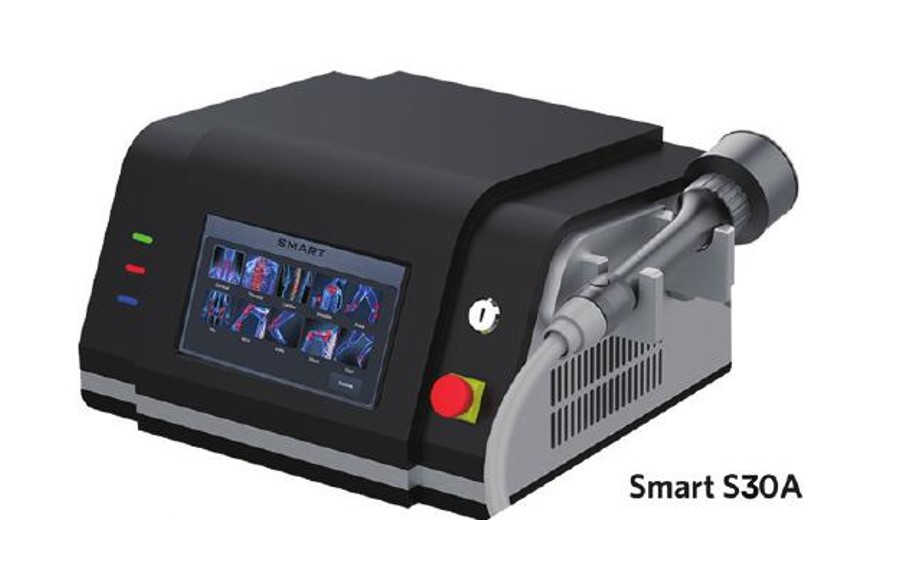 Smart S30A system · Manufacturer-authorized image
Equipment profile
High-power therapeutic laser technology.
The Smart S30A is a Class IV GaAlAs diode laser system. Manufacturer specifications list a 980 nm wavelength, up to 30 watts of output, continuous-wave and pulsed modes, and a 30 mm treatment spot.
Laser therapy is not appropriate for every patient or condition. Device-specific precautions, protective eyewear, candidacy, treatment settings, and expected benefits are reviewed by the treating clinician. Results vary.
Patient questions
Class IV laser therapy FAQs.
Clear answers about terminology, safety, and how clinician-directed laser therapy may fit into personal injury care.
What is Class IV laser therapy?
Class IV laser therapy is a noninvasive treatment that delivers higher-power therapeutic light to a defined treatment area. It is also commonly described as high-power or high-intensity laser therapy. A SpineLUX clinician evaluates the injury and determines whether it is appropriate within the patient’s broader care plan.
Is high-power laser therapy the same as cold laser therapy?
No. The terms are sometimes used together online, but Class IV high-power laser systems operate at a higher output than low-level or ‘cold’ laser devices. The Smart S30A used by SpineLUX has a maximum output of 30 watts and can operate in continuous-wave or pulsed modes.
Can laser therapy be considered after a car accident?
It may be considered for some accident-related muscle, joint, or soft-tissue symptoms after a clinical evaluation. It does not replace diagnostic evaluation, and not every patient or injury is a candidate.
What happens during a laser therapy visit?
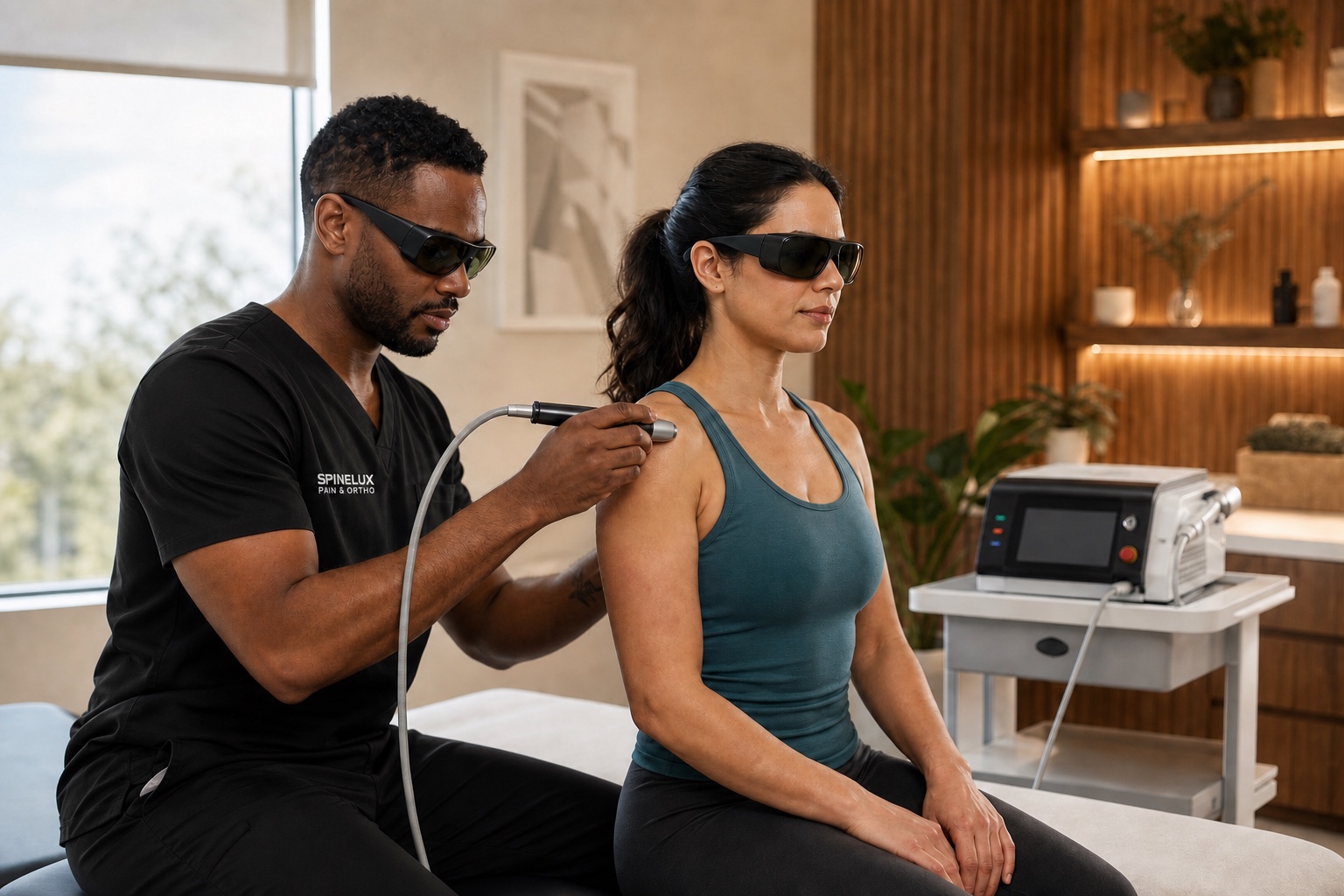
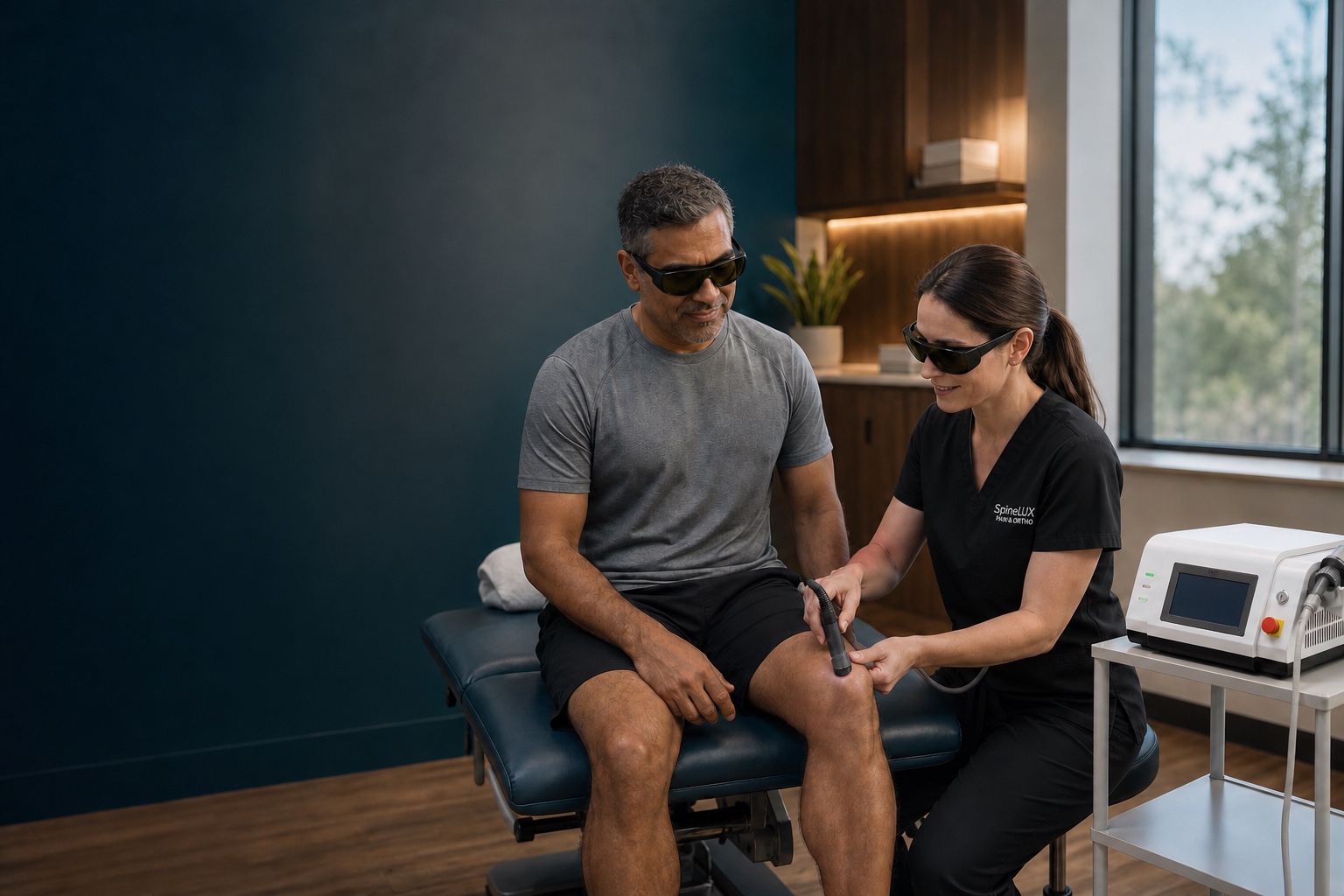
The clinician identifies the treatment area, selects individualized settings, and applies the laser while the patient and clinician wear protective eyewear. Treatment recommendations and visit frequency depend on the evaluation and response to care.
Is the Smart S30A FDA approved?
SpineLUX describes the Smart S30A as FDA-cleared, not FDA-approved. FDA clearance and approval are different regulatory pathways. Treatment suitability is determined by the treating clinician.
Services may include
01Clinical evaluation before treatment
02Targeted Class IV laser therapy
03980 nm therapeutic wavelength
04Continuous-wave or pulsed treatment modes
05Individualized treatment settings
06Coordination with pain, orthopedic, or spine care
Related concerns
✓ Accident-related musculoskeletal pain
✓ Neck and back discomfort
✓ Shoulder and knee pain
✓ Joint and soft-tissue symptoms
✓ Pain-related limits in movement
✓ Recovery support after injury
Specific services, candidacy, and recommendations are determined after clinical evaluation. Availability may vary by location.