 EspañolRequest care ↗
Accident-related conditions
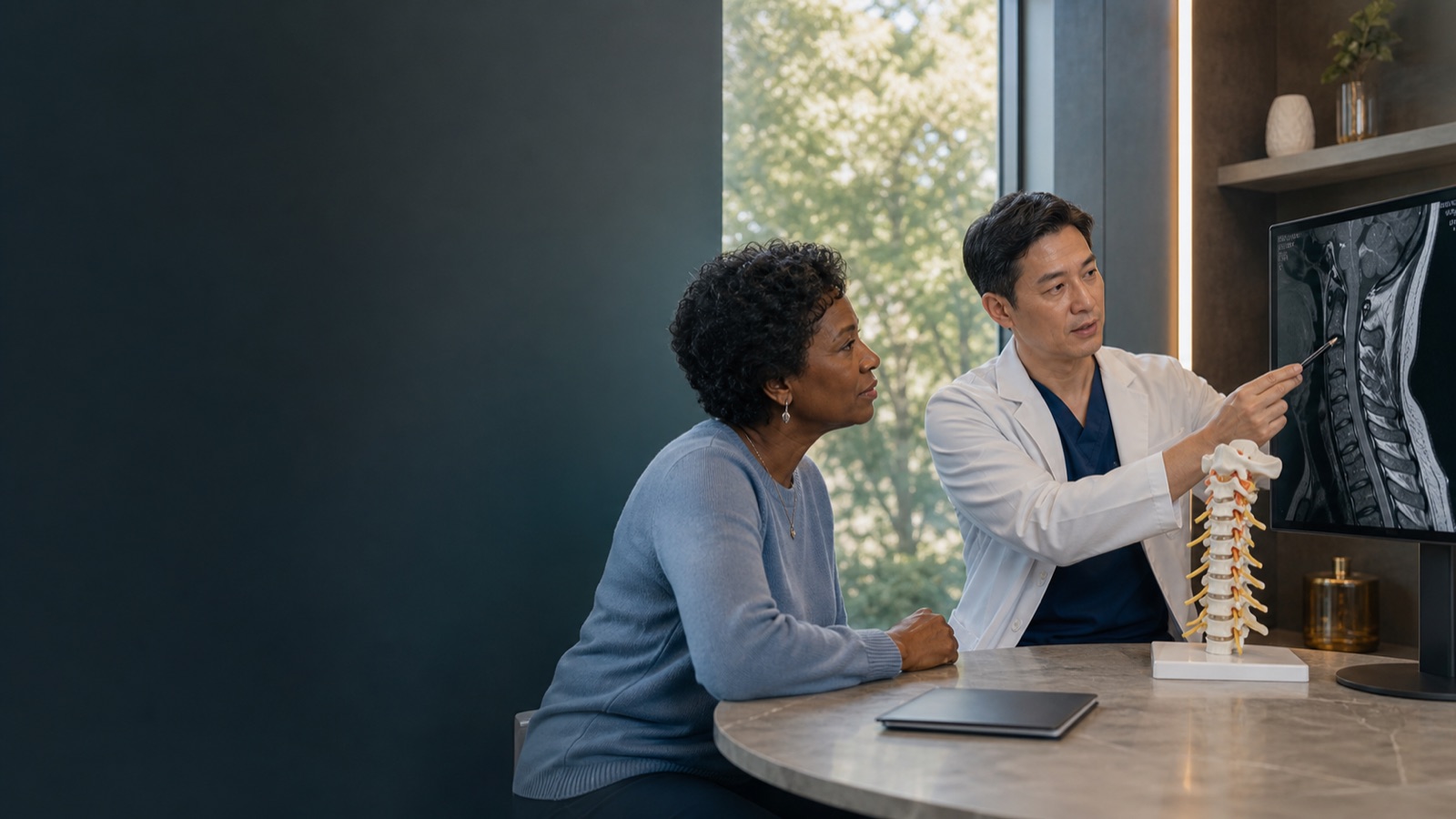
Herniated & Bulging Discs
after an accident.
Understand symptoms and evaluation options for a suspected cervical or lumbar herniated disc after an accident in Texas.
Medically reviewed by Fortune Okoro, MD. Last reviewed October 13, 2026.
Understanding the symptoms
What patients may notice.
Disc findings must be interpreted alongside the patient's symptoms and examination. Some disc changes cause no symptoms, while others may irritate or compress a nearby nerve.
✓ Neck or low-back pain
✓ Pain traveling into an arm or leg
✓ Numbness or tingling
✓ Muscle weakness
✓ Pain affected by movement, coughing, or prolonged sitting
Clinical evaluation
The next step depends on the findings.
A spine-focused examination helps determine whether symptoms follow a nerve pattern and whether MRI or another study may answer a meaningful clinical question.
This information is educational, not a diagnosis. Call 911 or seek emergency care for severe, rapidly worsening, or life-threatening symptoms.
Frequently asked questions
Answers for patients.
Can a car accident cause a bulging or herniated disc?
Yes. The sudden forces of a collision can injure a spinal disc or aggravate existing disc degeneration. Symptoms may include neck or back pain, or pain, numbness, or tingling that radiates into an arm or a leg. MRI is commonly used when clinically indicated. Whether those symptoms relate to the crash is determined by clinical evaluation.
Does a herniated disc always need surgery?
No. Many people improve with non-surgical care. Surgery is considered only for specific findings or symptoms after a clinical evaluation. A herniated disc does not by itself mean an operation is required. The plan depends on the examination, imaging when indicated, and how symptoms affect function.
Related SpineLUX services
Connected specialties for complex injuries.
Spine Care
Focused evaluation and treatment planning for cervical, thoracic, and lumbar injuries after an accident.
Interventional Pain Management
Diagnosis-led, minimally invasive care for accident-related spine, joint, and nerve pain at clinics across Texas.
Imaging
Diagnostic imaging coordination to help clinicians identify injuries and guide appropriate care.
Orthopedics
Evaluation and treatment planning for bone, joint, muscle, tendon, and ligament injuries after an accident.