
There is no single doctor for every car accident injury
A car accident can affect several parts of the body at once. One person may have neck stiffness and headaches. Another may have shoulder weakness, low-back pain, tingling in a leg, poor sleep, or anxiety about driving. The most useful first appointment is not determined by the size of the vehicle damage. It is determined by the patient’s symptoms, examination, medical history, and any urgent warning signs.
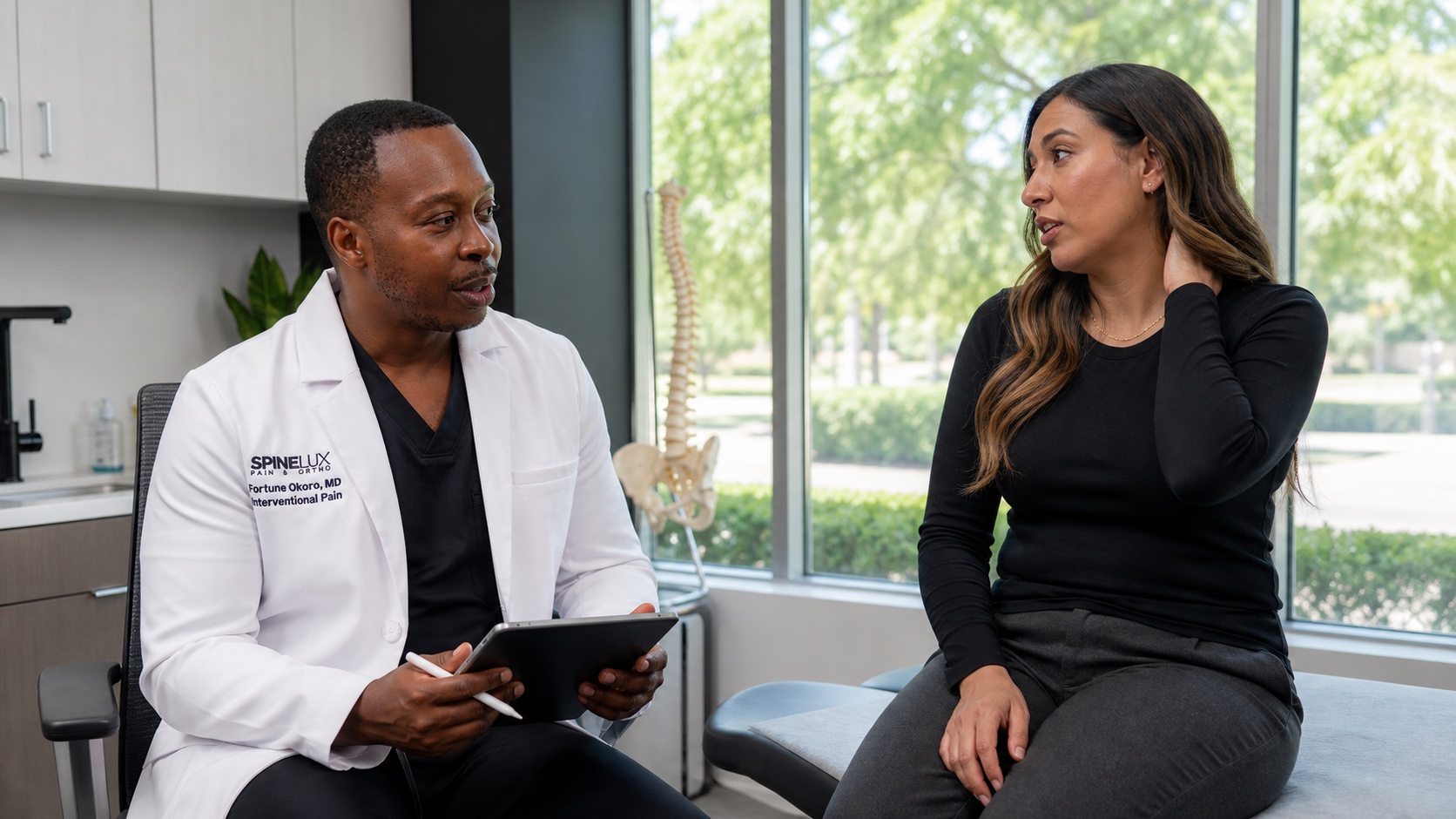
For many patients, an injury-focused medical evaluation is the practical starting point. The clinician can document the history, perform a neurological and musculoskeletal examination, identify concerns that require urgent care, and direct the patient to the appropriate specialty rather than asking the patient to guess which office to call next.
Match the specialist to the symptoms
Interventional pain physicians evaluate accident-related neck, back, joint, and nerve pain and may recommend diagnosis-led treatment when symptoms persist. Orthopedic clinicians focus on bones, joints, tendons, ligaments, and extremity injuries. Spine specialists evaluate problems involving the cervical, thoracic, and lumbar spine, including disc and nerve-root symptoms.
A neurologist may be appropriate for persistent headaches, dizziness, balance changes, memory or concentration problems, numbness, weakness, or other nervous-system symptoms. Mental health counseling can support patients experiencing driving fear, nightmares, anxiety, low mood, or difficulty adjusting to pain and reduced function. Imaging is selected to answer a defined clinical question—not simply because a collision occurred.
- Pain management: persistent neck, back, joint, or nerve-related pain
- Orthopedics: shoulder, knee, hip, hand, foot, fracture, tendon, or ligament concerns
- Spine care: whiplash, disc symptoms, sciatica, radiculopathy, or spinal injury
- Neurology: concussion, headache, dizziness, cognitive change, numbness, or weakness
- Mental health counseling: anxiety, driving fear, sleep disruption, or emotional trauma
- Imaging: X-ray, CT, MRI, ultrasound, or DTI when clinically appropriate
When the emergency department is the right destination
An outpatient accident clinic is not a substitute for emergency care. Call 911 or go to an emergency department for severe or worsening head pain, repeated vomiting, seizure, increasing confusion, loss of consciousness, new weakness, slurred speech, chest pain, trouble breathing, uncontrolled bleeding, severe abdominal pain, or a visibly deformed limb.
Emergency clinicians focus on immediate threats. Follow-up care may still be needed after discharge when pain, neurological symptoms, restricted movement, or emotional effects continue. Bring emergency records and imaging information to the next appointment whenever possible.
Why coordinated care can be easier than separate referrals
A patient with headaches, cervical pain, shoulder weakness, and anxiety may need more than one specialty. If each office works independently, the patient may repeat the story, locate records, transport images, and track several treatment plans. A coordinated injury-care organization can share the reason for each referral and keep the relevant findings connected.
SpineLUX provides one intake pathway across interventional pain management, orthopedics, spine care, neurology and brain injury care, mental health counseling, and imaging. Not every patient needs every service. The goal is to connect only the clinically appropriate services while making the next step easier to understand.
What to ask when choosing a car accident injury doctor
Ask whether the accident and injury clinic regularly evaluates car accident injuries, which specialties are available, how urgent symptoms are handled, and how prior records and imaging will be reviewed. Confirm the location, language access, scheduling process, and financial arrangements before the visit. Patients represented by an attorney should still make their own informed medical decisions; legal and clinical roles remain separate.
SpineLUX offers bilingual English and Spanish intake at 972-920-9111. Pain-management locations serve Irving, Houston, San Antonio, McAllen, and El Paso, while telehealth neurology and mobile EEG, qEEG, and brain mapping can extend access across Texas.
Common questions
Frequently asked questions
Should I see a primary care doctor or a specialist after a car accident?+
The right starting point depends on your symptoms and urgency. An injury-focused evaluation can identify whether pain management, orthopedics, spine care, neurology, imaging, counseling, or emergency care is appropriate.
What doctor treats whiplash after a car accident?+
Whiplash may be evaluated through a spine-focused, pain-management, orthopedic, or rehabilitation pathway depending on the symptoms, examination, and neurological findings.
Can one clinic coordinate several specialists?+
Yes. A multidisciplinary organization can coordinate relevant referrals and records, although each service should still be based on the patient’s individual clinical needs.