
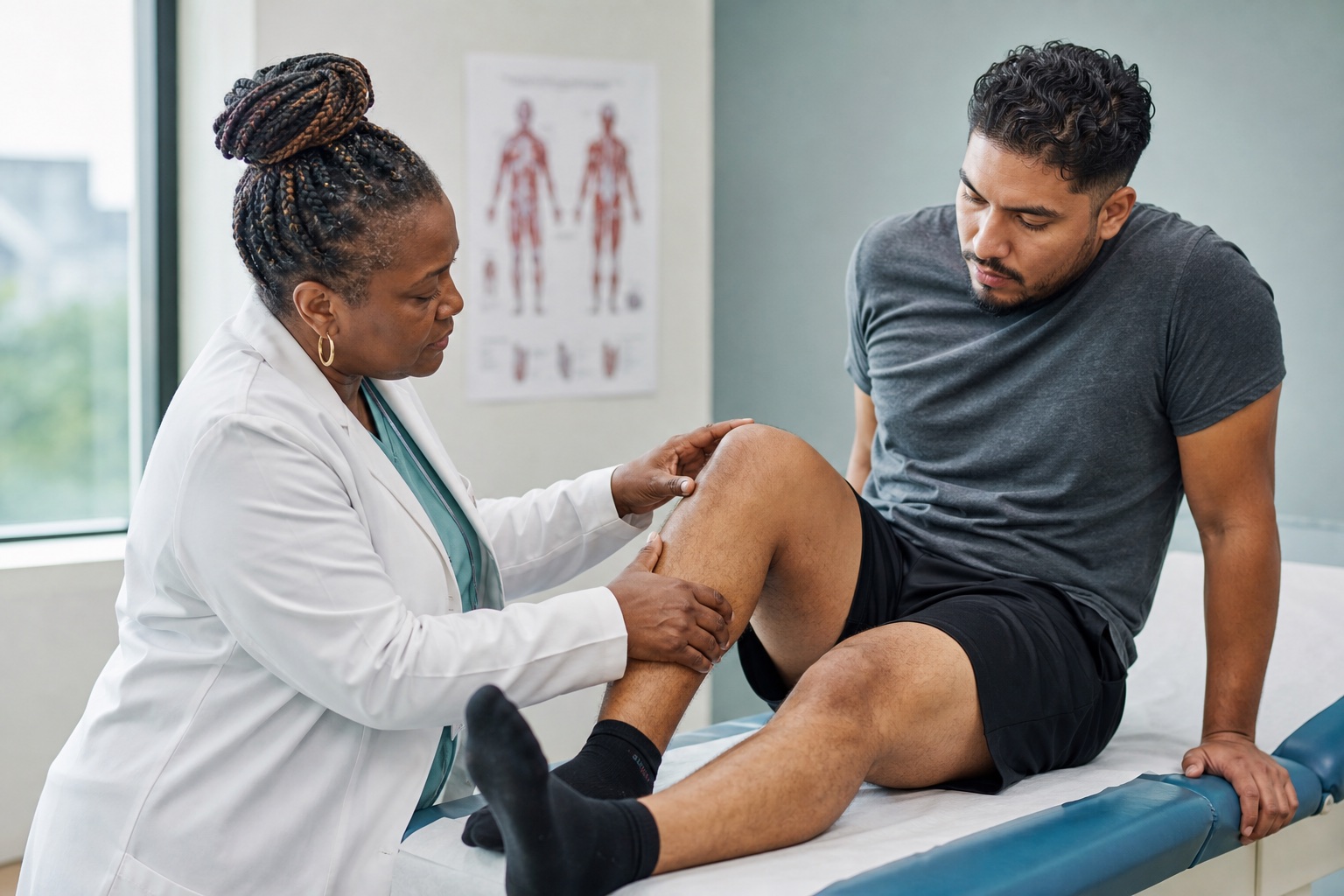
Orthopedics covers more than broken bones
Orthopedic physicians evaluate bones, joints, muscles, tendons, ligaments, and related movement problems. After a collision, that can include shoulder pain from bracing, knee injury from dashboard contact, wrist pain from gripping the wheel, hip pain, fractures, joint instability, or soft-tissue injury.
The visit should connect anatomy with function. Where is the tenderness? Is motion limited by pain or true mechanical restriction? Does a joint catch, lock, buckle, or feel unstable? Can the patient lift, grip, bear weight, climb stairs, or return to work duties?
Examination determines which images are useful
X-rays are often the first study for suspected fracture, dislocation, or alignment problems. MRI may be considered for tendons, ligaments, cartilage, joint structures, bone bruises, or an occult injury. CT can clarify complex bone anatomy, while ultrasound can evaluate selected superficial or moving structures.
Ordering every scan at once is rarely the most efficient approach. A focused examination helps the orthopedic clinician select the study that is most likely to change treatment. Prior images should be reviewed to reduce unnecessary duplication.
Nonsurgical care and surgical judgment
Many orthopedic injuries improve with a structured nonsurgical plan. Depending on the diagnosis, this may involve activity modification, bracing, medication, rehabilitation, injections, and scheduled reassessment. Progress should be measured through stability, motion, strength, pain, and real-world function.
Surgical consultation may be appropriate for displaced fractures, complete tendon or ligament tears, significant instability, mechanical joint problems, or injuries that do not respond to reasonable conservative care. A surgical opinion is a decision point—not a promise that surgery is necessary.
Coordination prevents the injured body part from becoming a silo
A shoulder complaint may coexist with cervical nerve symptoms. Knee pain may change a patient’s gait and aggravate the back. Headache, sleep loss, and anxiety can affect recovery. Orthopedic care is stronger when these connected issues are recognized rather than sent into unrelated referral chains.
Within SpineLUX, orthopedics can coordinate directly with pain management, spine care, neurology, imaging, and counseling so that new findings move with the patient.
Common questions
Frequently asked questions
What injuries does an orthopedic doctor treat after an accident?+
Orthopedic physicians evaluate fractures, joint injuries, sprains, strains, tendon and ligament injuries, cartilage problems, and other musculoskeletal conditions.
Does an orthopedic consultation mean surgery?+
No. Many injuries are treated nonsurgically. Consultation helps determine the diagnosis and the most appropriate treatment level.