
Brain injury symptoms can be broad and delayed
After a head impact or forceful body jolt, patients may experience headache, dizziness, balance problems, light or sound sensitivity, nausea, fatigue, memory difficulty, slowed thinking, mood change, or sleep disruption. Some symptoms appear immediately; others become noticeable hours or days later.
Neurology helps organize those symptoms into a clinical picture. The evaluation considers the injury mechanism, emergency records, prior neurological history, medications, symptom progression, and a focused examination of cognition, cranial nerves, strength, sensation, coordination, gait, and balance.
Telehealth and in-clinic neurological consultation
Telehealth can improve access for history review, symptom follow-up, medication discussion, recovery planning, and parts of the neurological examination. In-clinic care may be preferred when hands-on testing, detailed balance assessment, or direct examination is needed. The right setting depends on the clinical question and patient safety.
SpineLUX offers both options, helping patients and attorneys across Texas begin neurological care without assuming that every visit must require long-distance travel.
Mobile EEG, qEEG, and brain mapping
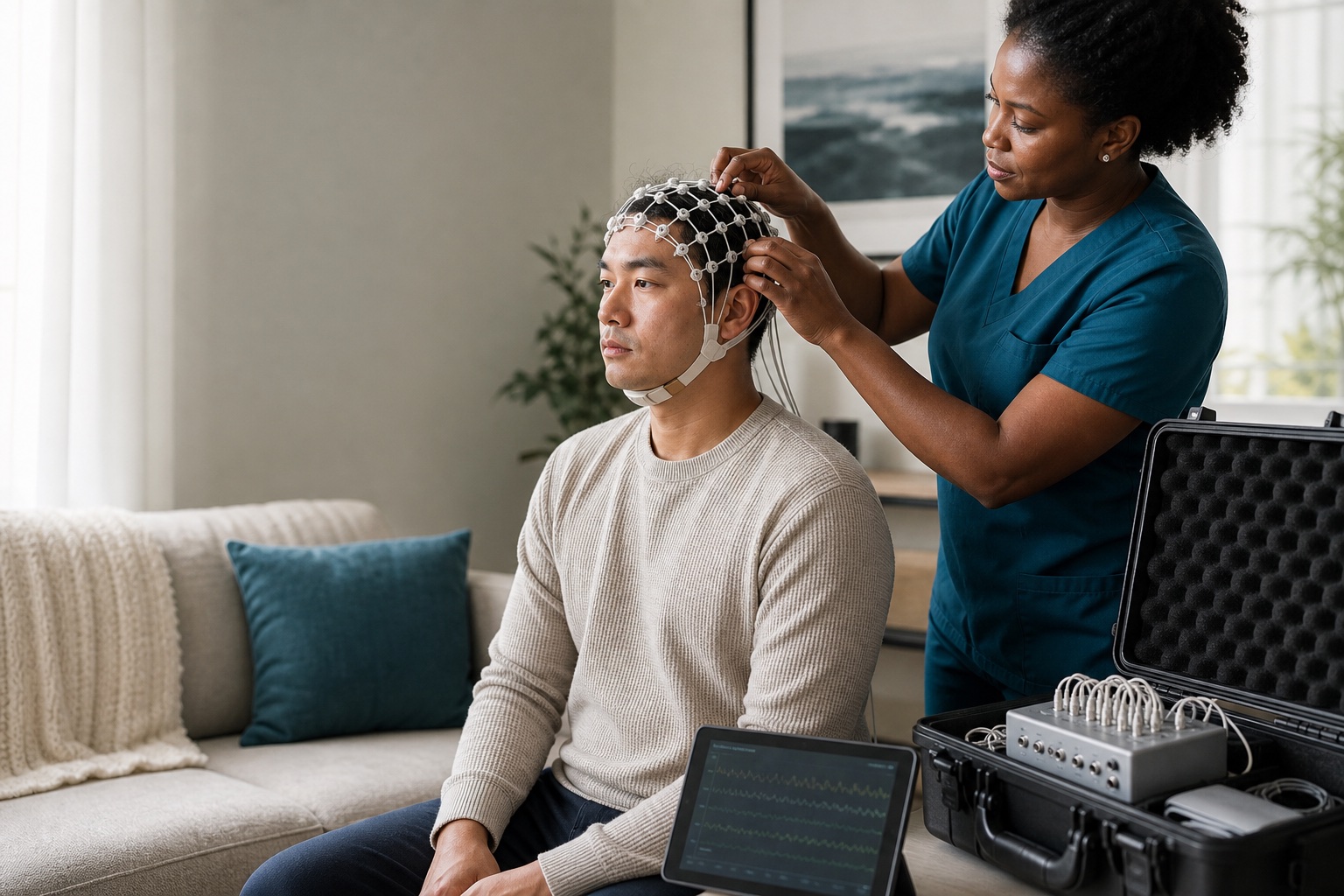
EEG records electrical activity from the brain and is commonly used when seizure or abnormal electrical activity is a concern. Quantitative EEG applies mathematical analysis to EEG data, while brain mapping displays patterns for clinical interpretation. SpineLUX can provide EEG, qEEG, and brain mapping as mobile services when clinically appropriate.
These studies are not interchangeable with a neurological examination, CT, or MRI. They should be ordered for a defined question and interpreted alongside symptoms, history, and other findings—not used as stand-alone proof of injury.
DTI/MRI and a coordinated brain-injury pathway
MRI can evaluate structural brain and spine anatomy. DTI is an MRI-based technique that examines water-diffusion patterns in white matter and may be considered in selected cases. No imaging technique should be overpromised; usefulness depends on the clinical context and interpretation.
Brain injury recovery may also involve pain, cervical injury, sleep disturbance, emotional symptoms, and functional limitations. Coordinating neurology with spine care, pain management, imaging, and counseling helps keep those overlapping needs visible.
Common questions
Frequently asked questions
Can a neurological consultation be done by telehealth?+
Many history, follow-up, and selected examination components can be completed by telehealth. The neurologist may recommend an in-person visit when hands-on assessment is needed.
Are EEG, qEEG, and brain mapping available as mobile services?+
Yes. SpineLUX offers mobile EEG, qEEG, and brain mapping across Texas when clinically appropriate.