
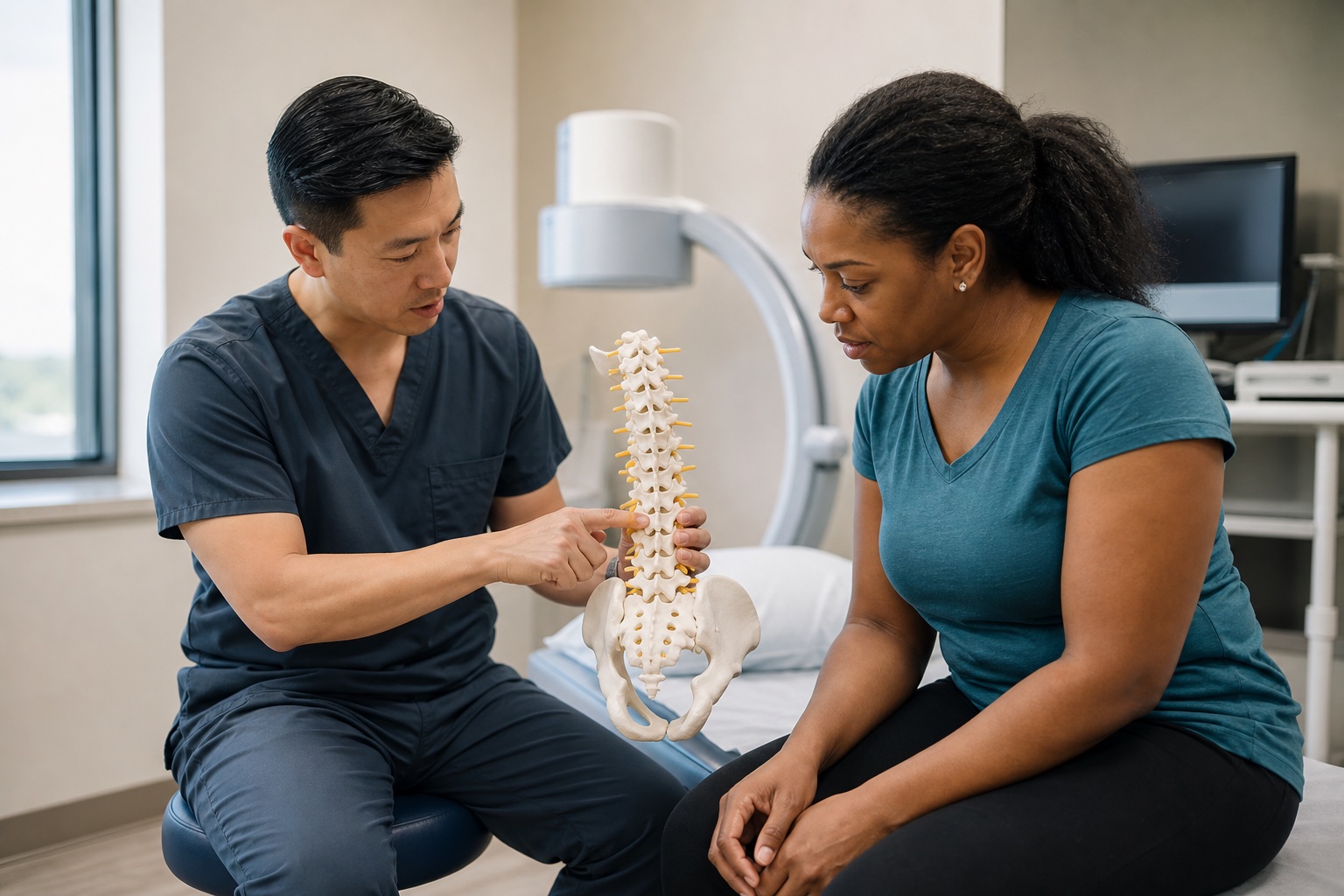
Pain is a symptom; the first job is understanding why
After a collision, pain may come from muscles, joints, discs, irritated nerves, bone injury, or several structures at once. A pain-management visit should begin with the history and physical examination—not an automatic procedure. The clinician looks at where pain starts, whether it travels, what movements change it, and how it affects sleep, work, walking, driving, and daily activity.
Relevant records and imaging are reviewed in context. An MRI finding does not always explain a patient’s pain, and significant symptoms can exist without a dramatic scan. The useful diagnosis connects the patient’s story, examination findings, imaging, and response to treatment.
What interventional pain management may include
Interventional pain physicians use nonsurgical and minimally invasive approaches to diagnose and treat selected pain conditions. Depending on the findings, care may include medication management, rehabilitation guidance, image-guided injections, diagnostic nerve blocks, radiofrequency procedures, or evaluation for neuromodulation. Not every option is appropriate for every patient.
- A focused neck, back, joint, and neurological examination
- Review of emergency, orthopedic, neurological, and imaging records
- A staged plan with measurable functional goals
- Targeted procedures only when the diagnosis and expected benefit are clear
- Reassessment when symptoms change or progress stalls
Why image guidance and follow-up matter
When a procedure is recommended, image guidance can help the physician place medication or instruments accurately. The procedure should have a defined purpose: reduce inflammation, test whether a structure is contributing to pain, or create a window for rehabilitation and improved function.
Follow-up is essential. The team should record how much relief occurred, how long it lasted, and whether the patient could do more afterward. A procedure that changes a pain score but not function may need to be interpreted differently from one that improves sleep, walking, work tolerance, or participation in therapy.
Pain care works best when it stays connected
Accident-related pain can overlap with orthopedic injury, spine pathology, concussion, neuropathy, sleep disruption, and emotional strain. When specialists communicate, the pain physician can act on new neurological findings, avoid duplicating imaging, and refer promptly when surgery or another specialty is more appropriate.
SpineLUX coordinates interventional pain management with orthopedics, spine care, neurology, imaging, and mental health counseling across Texas. The goal is efficient, diagnosis-led care—not treatment volume.
Common questions
Frequently asked questions
Does pain management only prescribe medication?+
No. Interventional pain management may combine examination, rehabilitation guidance, medication, diagnostic blocks, image-guided procedures, and coordination with other specialists.
Will every accident patient need an injection?+
No. Procedures depend on the diagnosis, examination, imaging, prior care, risks, and individual goals.