
The first visit builds the clinical baseline
Your first outpatient visit after a collision is an opportunity to explain what happened, identify current symptoms, and document how those symptoms affect daily life. The clinician will usually ask about the direction of impact, seat-belt use, air-bag deployment, head impact or loss of consciousness, emergency treatment, prior injuries, medications, and health conditions that may influence the evaluation.
Be specific without trying to diagnose yourself. Explain when each symptom started, whether it is improving or worsening, and what movements or activities change it. A simple timeline is often more useful than a long list with no sequence.
What to bring
Bring a photo ID, medication and allergy list, emergency-department or urgent-care paperwork, discharge instructions, and information about prior imaging. If you already have a patient portal, download the relevant reports rather than relying on memory. Also bring the contact information requested by the clinic for insurance, a claim, or an attorney, when applicable.
Write down the tasks that have become difficult: sleeping, driving, lifting, sitting, walking, concentrating, working, caring for children, or exercising. Functional changes help the clinician understand the practical effect of the injury and establish measurable goals.
- Emergency and urgent-care records
- Imaging reports and access instructions
- Current medications, allergies, and relevant medical history
- A brief symptom timeline
- Questions about activity, work, driving, and follow-up
- Interpreter or accessibility needs
The examination depends on your symptoms
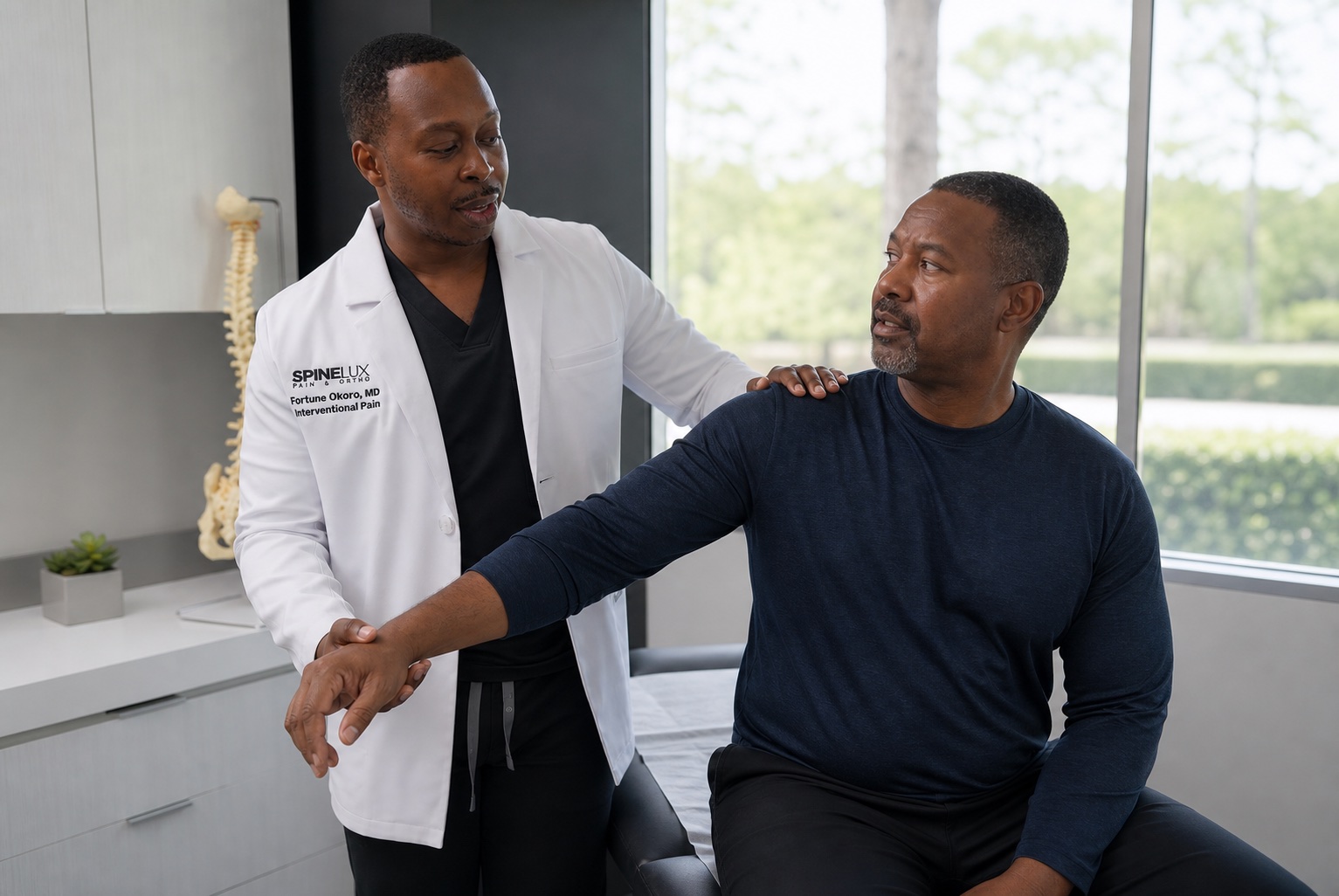
A musculoskeletal examination may include posture, tenderness, range of motion, strength, joint stability, and how symptoms change with movement. A neurological examination may evaluate alertness, memory, speech, eye movements, balance, coordination, reflexes, sensation, and strength. The clinician should explain what is being tested and why.
Some findings require urgent escalation. Others support a focused treatment plan or referral. A normal result in one area does not automatically rule out every injury, just as pain alone does not establish a specific diagnosis. The history and examination work together.
Imaging is not automatically the first step
X-ray, CT, MRI, ultrasound, and other studies answer different questions. X-rays are useful for many bone and alignment concerns. CT is often used when speed and detailed trauma imaging matter. MRI can show discs, nerves, the spinal cord, brain, ligaments, tendons, and other soft tissues. The appropriate test depends on the suspected structure, urgency, examination, prior studies, and safety considerations.
A good plan explains what the test is expected to clarify and who will review the result. Imaging that is not connected to a clinical question can lead to incidental findings, confusion, unnecessary duplication, or delay.
Leave with a clear next step
Before the visit ends, ask what the working assessment is, what symptoms should prompt urgent care, what activities are safe, whether a referral or study is being ordered, and when follow-up should occur. If several specialties are involved, ask who is coordinating the plan and how results will be communicated.
SpineLUX uses one bilingual intake pathway to connect appropriate personal injury services. Patients can begin by calling 972-920-9111 or submitting the secure consultation request.
Common questions
Frequently asked questions
Do I need an MRI at my first visit after a car accident?+
Not necessarily. Imaging is selected according to the suspected injury, examination, urgency, prior studies, and whether the result would change management.
What if my symptoms started the next day?+
Some pain, stiffness, and concussion symptoms may become noticeable later. Tell the clinician when each symptom began and seek urgent care for danger signs.
Can I request care in Spanish?+
Yes. SpineLUX provides bilingual English and Spanish intake and offers a complete Spanish-language website.