
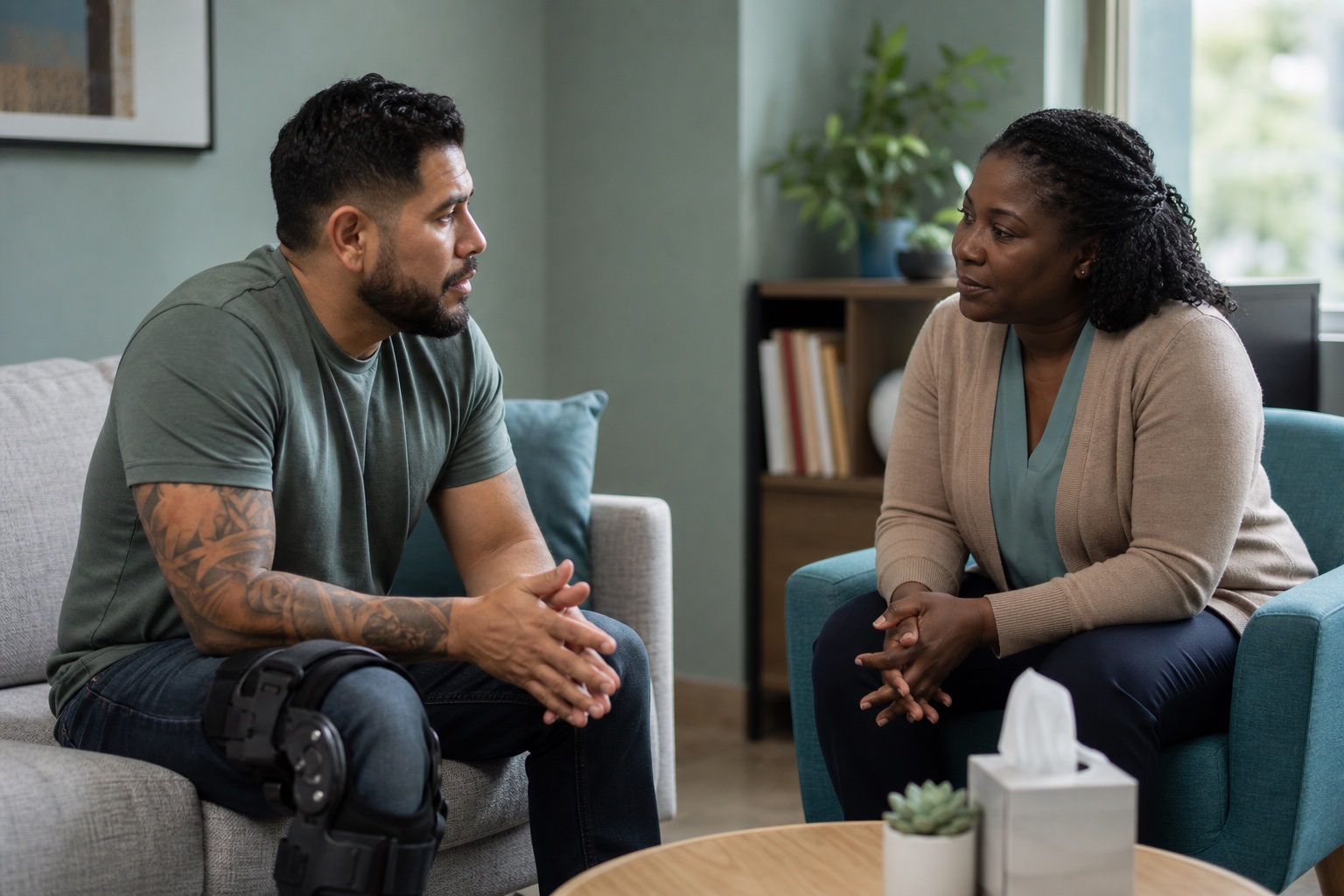
Recovery is not purely physical
After an accident, people often focus on visible injuries, scans, and appointments. Emotional effects can be quieter: replaying the collision, feeling tense in traffic, becoming frustrated by physical limitations, or lying awake because pain and worry will not settle.
These reactions do not mean someone is weak or that the injury is “psychological.” Pain is both a sensory and emotional experience, and recovery can affect work, family roles, finances, sleep, identity, and independence.
Common emotional reactions
People respond differently. Some feel shaken immediately; others remain focused during the crisis and notice emotional changes later.
- Anxiety, irritability, anger, sadness, worry, or emotional numbness
- Fear of driving, riding in a car, falling again, or reinjury
- Trouble sleeping, nightmares, fatigue, or poor concentration
- Withdrawal from family, work, or previously enjoyed activities
- Frustration, guilt, grief, or a sense of lost independence
Pain and emotional health influence each other
Ongoing pain can make sleep, work, movement, and social connection harder. In turn, poor sleep, stress, depression, and anxiety can shape how pain is experienced and how manageable recovery feels. This does not mean pain is all in the mind; it means the nervous system, emotions, behavior, and physical health interact.
The National Institute of Neurological Disorders and Stroke notes that depression, generalized anxiety, PTSD, and sleep problems commonly occur with chronic pain. Addressing emotional well-being can support coping, communication, and participation in care.
When counseling may help
You do not have to wait for a crisis. Counseling can help when worry, low mood, irritability, sleep problems, avoidance, or pain-related stress interferes with daily life. Trauma-informed support may include education about stress responses, grounding skills, sleep routines, pacing, communication, and gradually reconnecting with valued activities.
Small, repeatable actions are often more useful than pressure to stay positive. Maintain routines when possible, stay connected with supportive people, follow medical activity guidance, and tell your care team when symptoms affect work or relationships.
Mental health belongs in comprehensive injury care
Physical and emotional care do not compete. A patient can have a documented orthopedic, spine, neurological, or pain condition and also benefit from counseling. Treating the whole recovery experience makes care more realistic and humane.
SpineLUX offers mental health counseling under the same personal-injury umbrella as pain management, orthopedics, spine care, neurology, and imaging. Telehealth may be available when appropriate.
Common questions
Frequently asked questions
Is anxiety normal after a car accident?+
Anxiety, irritability, sleep changes, and fear can occur after a stressful accident. Seek support when distress is intense, persistent, worsening, or interfering with daily activities.
Can counseling help with injury-related pain?+
Counseling does not imply pain is imaginary. It can help with coping, sleep, stress, pacing, and the emotional effects of pain and reduced function.